There's a decision that keeps consumer brand founders up at night, and it goes something like this: "If we stop selling to these customers, we lose revenue. But if we keep selling to them, we might be losing money."
Most brands never get past the anxiety of that first sentence. They keep chasing every sale, every customer, every channel because revenue feels like progress and turning down business feels like failure.
Oliver Zak, co-founder and CEO of Mad Rabbit, used to think the same way. Until the Drivepoint platform revealed something that changed everything.
When the Market Stops Rewarding Growth at All Costs
Mad Rabbit's trajectory looked like an entrepreneur’s dream: explosive Shark Tank appearance with a deal from Mark Cuban, rapid venture-backed growth, and a leadership position in the tattoo aftercare category. The company scaled from dorm-room hustle to a multi-channel consumer brand across DTC, Amazon, wholesale, and retail.
Then 2024 hit. The tattoo industry cooled after unprecedented growth. Consumer spending slowed. And the market fundamentally reset around a metric Mad Rabbit hadn't yet optimized for: EBITDA.
"We were staffed to grow, and we didn't grow," Oliver recalls. "We made the obvious cuts: trimming agencies, renegotiating with vendors, reducing inefficient marketing spend. But as the dust settled, we realized we were now a completely different business model than three months earlier."
The obvious cuts were easy. What came next was harder: figuring out what their business actually was now, and whether it could be profitable.
The 20% of Customers Who Were Destroying Margins
Mad Rabbit's finance team worked primarily in Excel, using surface-level KPIs and generalized assumptions to forecast quarterly. Planning cycles took weeks. When strategic questions arose—"Should we kill DTC entirely?" or "What AOV do we need to make this channel viable?"—they spent days building one-off scenarios.
Oliver was confident in their projections, but confidence isn't the same as clarity. "We needed a clear idea of how to set goals for KPIs like repeat rate and AOV, or how improving them during a sale could impact the baseline."
When they deployed Drivepoint's intelligent FP&A platform, the first insight wasn't encouraging.
Drivepoint's cohorted financial analysis broke down customer lifetime value from sales through contribution profit by acquisition cohort, then layered in customer acquisition costs. The data was unambiguous: 20% of Mad Rabbit's DTC customers were buying single products on sale and never returning. After accounting for CAC and all direct variable costs, Mad Rabbit was losing money on every single one of these transactions.
Every. Single. One.
"The counterintuitive decision that Drivepoint revealed was: let's actually not sell to these people. We don't want that customer."
Most brands would never make that call. Most brands don't have the financial infrastructure to know they should.
From "We Think This Might Work" to "The Numbers Are Clear as Day"
Here's what separated Mad Rabbit's transformation from the typical cost-cutting story: they didn't just identify problems and hope their solutions would work. They modeled every option before committing.
Drivepoint's scenario modeling capabilities let the team test multiple paths in minutes. Kill DTC entirely? Model it. Identify what needed to be true to make DTC profitable: higher AOVs through bundling, adjusted CAC targets, different product mix? Model all of it. Each scenario showed complete P&L, cash flow, and unit economics impact.
The platform's driver-based financial model had all the key inputs built in: AOV by cohort, CAC levels, product mix, retention rates. No more spending days in Excel trying to account for every variable. No more "I think this will work" conversations. Just scenarios, data, and confidence.
The numbers gave Mad Rabbit the conviction to execute on something radical: a bundle-only strategy for new customers. A major operational shift backed by rigorous financial modeling instead of crossed fingers.
"Drivepoint gives me very strong conviction because the numbers are clear as day, and that makes decisions easier."
The Visibility That Eliminates Anxiety
Oliver talks about Drivepoint's value in terms that every founder understands: reduced anxiety.
"Knowing where your business is oriented will always reduce anxiety and uncertainty. That's invaluable."
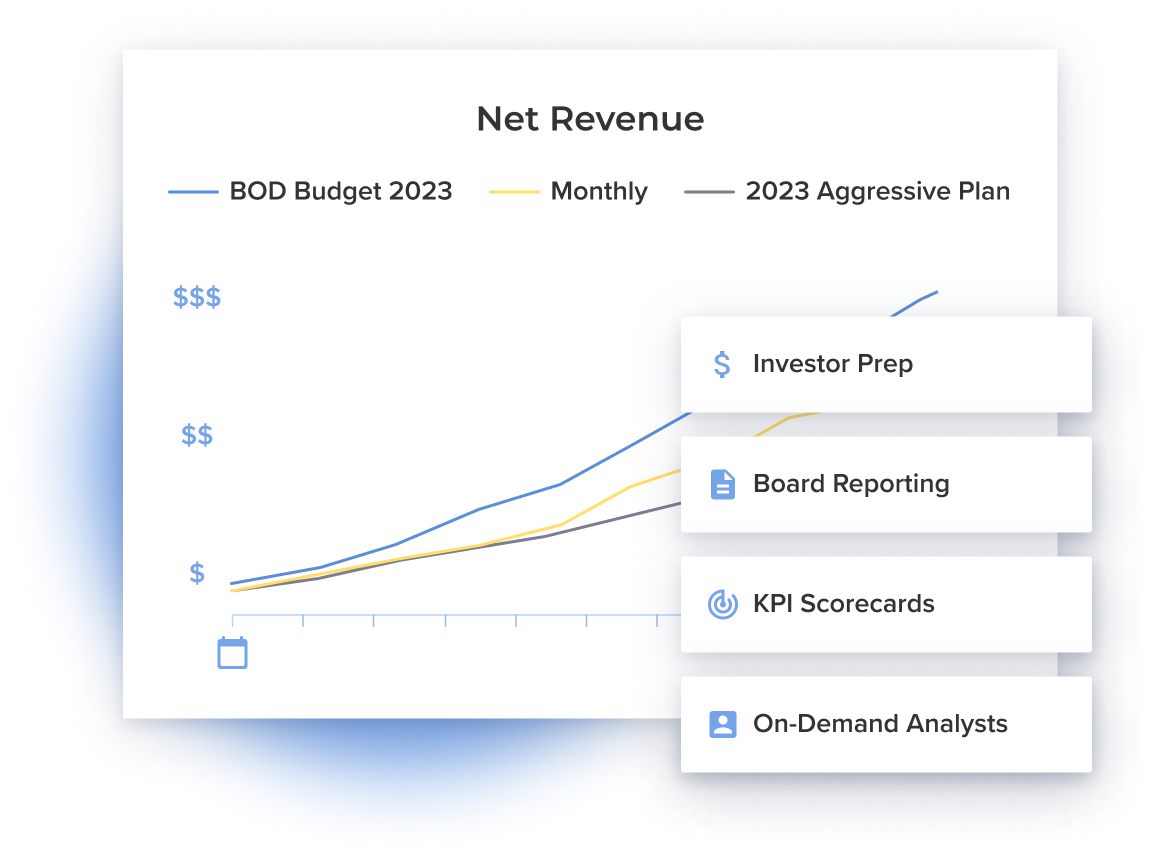
That anxiety reduction comes from three places. First, Drivepoint's real-time dashboards let Mad Rabbit track performance against the drivers that actually matter (first-time customer AOV, product mix, retention metrics) without waiting weeks for month-end close. Oliver can see where the business is sitting and what cash will look like in real time.
"As an executive, the dashboarding and visualization that Drivepoint brings to the table is probably the most valuable thing for me at the moment"
Second, automated variance analysis doesn't just show where Mad Rabbit missed their budget. It explains why. Monthly reviews reveal exactly where to focus improvement efforts, moving the team from gut instinct to data-driven prioritization.
"We weren't sure that the levers we were pulling and setting as our North Star were necessarily the most effective for the business. Drivepoint really took that process and made it a lot simpler for us."
Third, when board members ask hard questions, there are answers. Immediately. In the meeting. Not "we'll get back to you after running some numbers."
"I have some very financially savvy board members who can sniff out any sort of error. Those just don't happen. And when they double-click on something, there's always an answer for it."
The Outcome: 20% EBITDA Improvement Without Adding Headcount
Mad Rabbit improved EBITDA by approximately 20% within months of deploying Drivepoint's platform. Planning cycles that once took weeks now take a couple of hours. They reforecast monthly without drowning in manual work. They run unlimited scenarios without Excel archaeology.
But the real transformation is what Oliver describes as "full confidence" in a finance department that's just one FTE plus Drivepoint's platform, doing the work that typically requires multiple FTEs.
"I'm able to have full confidence in my finance department with that setup. It's pretty amazing."
The platform's AI-powered insights surface opportunities and risks that would take days of manual analysis to uncover: the cohort reporting that identified unprofitable customer segments, the variance analysis that pinpointed improvement areas, the scenario modeling that proved which strategies would actually work.
"It truly unlocks a deeper understanding of your business down to the unit economics."
The Choice Every Consumer Brand Faces
Mad Rabbit's story isn't about getting lucky with cost cuts or hoping for the best. It's about building the financial infrastructure to see clearly, model confidently, and execute decisively.
Every consumer brand eventually hits the same inflection point where the old playbook stops working. Some respond by hiring consultants. Others muscle through with spreadsheets and overtime. A few recognize that world-class strategic finance is about capability.
Mad Rabbit chose to build that capability internally. One finance FTE plus the right platform delivers strategic planning capability that typically requires multiple team members. The result? A company that transformed from venture-backed growth story to sustainable business without sacrificing speed, agility, or ambition.
When asked what he'd tell someone wondering if investing in Drivepoint is worth it, Oliver doesn't hesitate:
"Tenfold. Absolutely. I highly recommend Drivepoint to all the companies I advise for."
Because at the end of the day, the brands that win in 2026 aren't the ones chasing every sale. They're the ones who know exactly which customers drive profitability and have the conviction to act on it.
Mad Rabbit is a leading tattoo care brand that appeared on Shark Tank, securing a deal from Mark Cuban. Founded by Oliver Zak and Selom Agbitor while in college, the company has grown from dorm-room hustle to a multi-channel consumer brand sold in DTC, Amazon, wholesale, and retail.