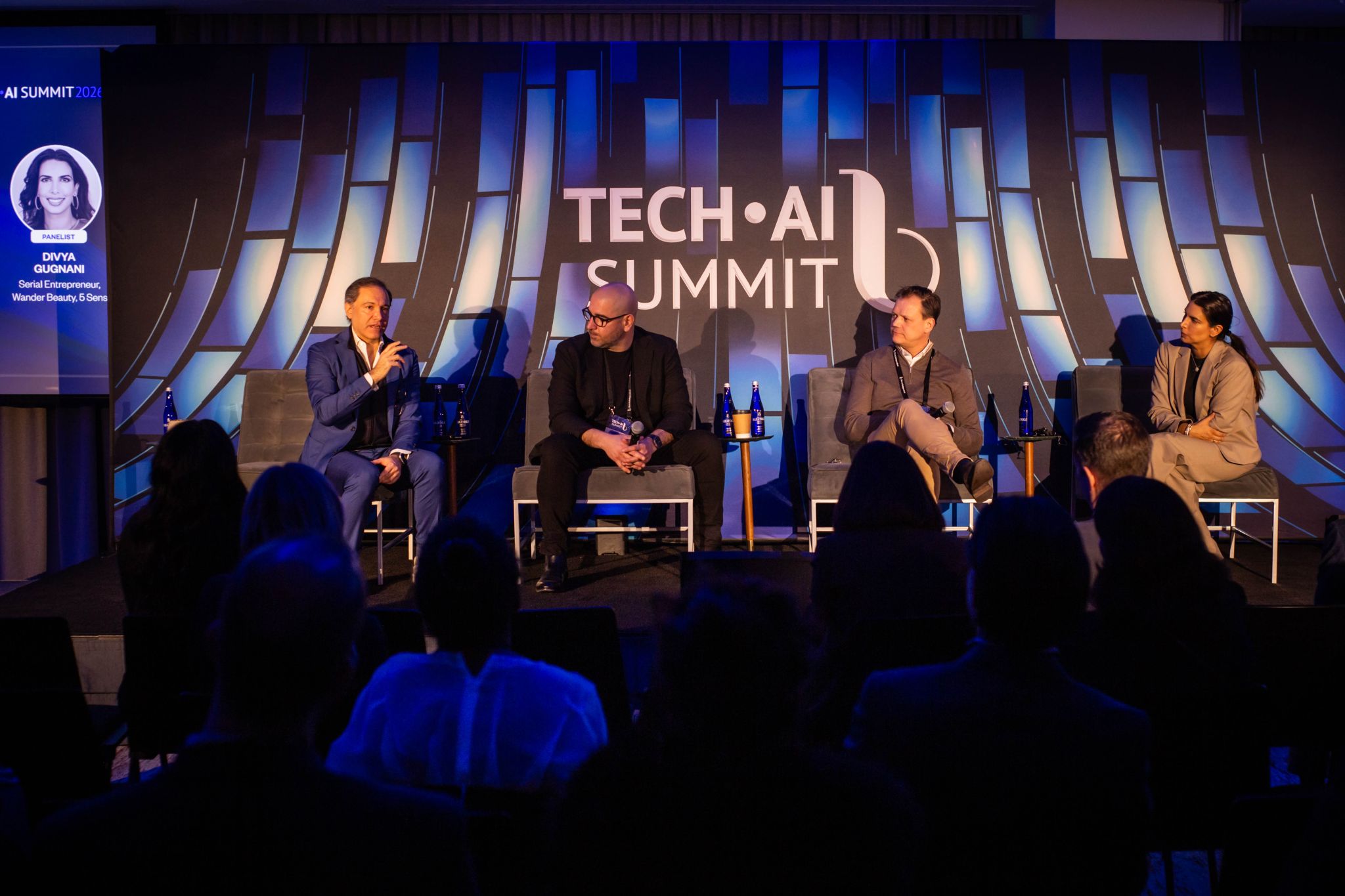
The Beauty Independent Tech*AI Summit brought together founders, operators, and technology leaders to explore how AI and modern finance tools are reshaping the consumer goods landscape. From AI as co-pilot to finance as competitive advantage, here are the critical insights that emerged.
AI as Co-Pilot, Not Replacement
Divya Gugnani, founder and CEO of 5 SENS, brought a nuanced perspective on AI adoption. With a finance background from Goldman Sachs and an MBA, she described AI as an "incredible co-pilot" that amplifies human capabilities.
"I don't think there are inaccuracies as much as there are what I call alarmist bells," Gugnani explained about AI-generated insights. "You as a human being have to temper those bells and say, does this make sense or not?"
For 5 SENS, a fragrance brand built around emotions rather than traditional scents ("I make feelings, I don't make fragrance"), AI has been transformative:
"Just the whole brand positioning of the brand, and how I thought about the brand. AI was a part of that co-pilot," Gugnani shared. "Naming fragrances, looking at data, coming up with segments we should go after, fragrance families we should invest in, demand planning."
She uses Claude for analytical tasks and Excel functionality, Perplexity for brand copywriting and voice development, and creates projects where she uploads all final copy so AI learns her communication patterns.
DTC 3.0: Small Teams, Extraordinary Outcomes
Dave Skaff, co-founder of Geologie (acquired after building a successful subscription skincare business), described the evolution of direct-to-consumer brands through three distinct eras:
- DTC 1.0 (2012-2017): Low customer acquisition costs, but e-commerce was technically difficult
- DTC 2.0 (2019-2022): Easy tools led to crowded markets and rising CACs, followed by the COVID capital boom and bust
- DTC 3.0 (Now): "Very small teams doing pretty extraordinary things, if they have mastered technology"
Skaff was emphatic about the state of the game: "Actively reducing headcount and actively training your team to use these tools better. That is table stakes right now."
At Geologie, they reduced their customer service team from eight people to three (and could have gone to one). "When we sold the brand, that team of 12 knowledge workers probably could have been managing at least one other brand, if not two other brands," he revealed.
On AI tools specifically, Skaff noted: "I think Claude has in the last six weeks gone head and shoulders above the rest in terms of what it can do... It's creating amazing models. Its copy is better than ever. Its integration with Google Drive, Google Sheets. It's amazing."
His advice for founders starting fresh? "I would take a lot of the lessons we learned at Geologie... The next generation of all of these businesses should actively (look at) headcount and actively train teams to use these tools better."
The Technology Force Multiplier
Skaff described how Geologie's technology lead became a "force multiplier for the whole team." They implemented their own data warehouse, allowing them to consolidate data from every system and create custom dashboards without relying on third-party services.
"Having someone in our organization who could go around the horn, connect systems and teach people how to get more out of their platforms was key," he explained. "The amount of money you can save—that hire will pay for itself, I guarantee."
The technology lead wasn't just a systems person. They moved throughout the organization wherever help was needed most. "This is a guy who basically went wherever the fire was hottest in the company to improve processes, to help people who may have not been like native technologists," Skaff explained. "With almost every piece of software, there's another level that you can get to. If you get to that level, that's going to be a force multiplier for what you do every day."
Continuous Learning as Competitive Advantage
Jeff Lee of DIBS Beauty, which became the fastest-growing color brand at Ulta, emphasized the importance of continuous skill development in the age of AI.
He compared learning AI to physical training: "Having people that know it better at least show you some of the steps, day in and day out... Similarly, having people that know AI better show you the steps—it's like learning how to work out in a different way."
Lee shared his own journey of constant reinvention. Coming from seven years in big law M&A, he recognized early that professional landscapes were shifting dramatically. His response was to "delete what I do every year and reboot,” from founder scrappiness to learning retail by actually working in stores to now mastering AI tools.
Lee was also candid about management philosophy: "I'm a proud micro manager... But telescoping in is not about ignoring the broader strategic needs of the business. You don't know your business until you've actually gone into the weeds at least once."
His approach emphasizes hands-on learning across all business functions, ensuring leaders truly understand operations before delegating or automating.
When to Graduate from General AI to Specialized Tools
Gugnani offered practical guidance on the progression from general AI tools to specialized business applications:
"Taking base level, depending on stage and size of your business, getting yourself to a place where you understand the business, have a grasp on it... When you know your business, everyone else can help you grow your business. But if you don't know your business, you can get any AI tool you want, and it's not going to grow your business."
Her framework: Start with general AI tools like Claude to deeply understand your business and establish product-market fit. Once you've achieved that foundation and identified specific pain points, graduate to specialized tools like Drivepoint for financial modeling or customer service AI platforms.
"The more data you have, the more intelligent your AI can be," she noted. "The only constant is change. Just constantly feeding change into AI will make you ahead of that curve."
Finance Is Your Most Powerful Competitive Weapon
Austin Gardner-Smith of Drivepoint brought the conversation to strategic finance with a stark reality check: in 2026, product and marketing arbitrage are gone, arguing that finance is the most important function in a consumer brand. "Everyone has access to the same manufacturers, the same ad platforms, the same playbooks," he explained. What separates winners from losers? Financial rigor.
He illustrated this with a compelling example: two beauty brands, Paula's Choice and Coloró, both sold at roughly $300 million in revenue. Paula's Choice went to Unilever for nearly a billion dollars more than Coloró went to L'Oreal. The difference? EBITDA margins of 37% versus 12%.
"You didn't get there through one big thing," Gardner-Smith emphasized. "There are no magic bullets in CPG and consumer and beauty. There are thousands of lead bullets. You have to fire lead bullets over and over again."
His formula was simple but profound: Decision Quality × Decision Velocity = Enterprise Value. The brands that can make more decisions, make them correctly, and make them faster will create dramatically more value.
The Financial Model Comes First
Dave Skaff shared that Geologie's success started before they ever sold a product: "Before we ever sold our first product, we had a full working financial model to project whether we thought this would be a good idea to even start."
Coming from finance and technology backgrounds rather than beauty, Skaff and his co-founder built everything around financial modeling: "We had to decide on pricing. We had to have targets for our customer acquisition costs, repeat purchase rates, subscription purchase rates, conversion rates... We had to have some sense of whether we thought this could be a viable business."
The subscription model wasn't a nice-to-have. It was the business. "We were trying to create a skincare business that was as close to a subscription-based software business as it possibly could be," Skaff explained, bringing his SaaS background to beauty.
Real-World Impact: Drivepoint in Action
Both Skaff and Lee highlighted Drivepoint's role in their operations, offering concrete examples of how modern financial tools create competitive advantage.
Dave Skaff on early adoption: "Drivepoint was a super important part, and we were one of their first customers. Our model was pretty complicated because of all the SKUs we had going into subscription sets. So they really helped us in the early years, going from model 0.1 to the working model."
Jeff Lee provided even more dramatic results. His team saved $3.9 million in tariff charges through rapid scenario planning when election results signaled incoming supply chain pain.
With Drivepoint, this team was "able to rework the supply chain within a year, and a lot of that meant them going into the systems that we have, like Drivepoint, to do scenario planning very quickly and execute against it," Lee explained.
He continued: "We love Drivepoint. One of the things that they have done for us... is that they allowed us to scenario plan through the chaos of a rapid retail expansion, as well as through a year of tariffs... Thanks to 24/7 rapid P&L adjustments, supply chain adjustments, strategic adjustments."
Beyond tariff savings, Lee emphasized cash management: "Another piece that has been so critical for us is cash management. We, I believe, are very well financed, but that can't support a rapid retail expansion without a real security cushion built in your systems."
Building Strategic Finance Capability Internally
Lee stressed the importance of sophisticated financial planning despite the challenges unique to prestige color cosmetics. "LTV has been atomized" in color cosmetics, he explained—unlike skincare's subscription opportunities, color trends are fast-moving and unpredictable. Yet financial rigor remained critical.
The DIBS Beauty team of three finance people became extraordinarily productive. "Every minute of their days is worth its weight in gold," Lee said, adding: "We have three people in finance. Before you decide to hire three FP&A folks to go to five, make sure that you take a good look at the implementations of the technology that you have."
Practical Implementation: Start Today
The summit's consensus was clear: these aren't future considerations but present imperatives.
For early-stage brands:
- Invest 30 minutes daily in learning AI tools
- Build financial models before product launches
- Use general AI tools (Claude, Perplexity) to amplify small teams
- Focus on understanding your business deeply first
For scaling brands ($5M-$50M):
- Consider hiring a technology lead as a force multiplier
- Implement unified data infrastructure
- Graduate to specialized tools like Drivepoint for financial modeling
- Build internal capability rather than outsourcing strategic functions
For established brands ($50M+):
- Audit technology implementations before adding headcount
- Build complete data warehouses for custom analytics
- Use AI to reduce operational overhead while improving decision quality
- Focus on decision velocity as a competitive advantage
The Bottom Line
As Austin Gardner-Smith concluded, pointing to Drivepoint's beauty customers who saw an average 6.7 percentage point EBITDA improvement in their first year: "75% of customers see EBITDA improvements in the first year... When you can run scenarios faster, you make better decisions. When you make better decisions, you improve margins."
The summit made one thing abundantly clear: in 2026, the combination of AI tools for operational leverage and sophisticated financial planning isn't optional. It's the foundation of competitive advantage in consumer goods.
As Divya Gugnani put it: "We, as leaders of everything we do, we have to take a step back and work on the business, not in the business." The brands that master the balance of combining AI-powered operational efficiency with strategic financial rigor will be the ones that thrive in the new era of consumer goods.